Discover privacy-focused, GDPR-compliant European services to replace US tech giants. Keep your data in Europe, support local innovation, and take back control of your digital life.
2084Tools reviewedEvery tool has its own reviewed page
35European countriesBased on where the vendor is legally established
212Categories coveredFrom cloud storage to payment processing
Project management delivers one piece of work. Portfolio management decides which work to do at all. What the difference means for a European PMO, from GDPR and works councils to vendor jurisdiction, and how to choose tooling.
A new European research publication puts the dataset, the reference period and the method next to every figure it prints. We looked at what it publishes, how it is funded and why that combination is rarer than it should be.
Self-hosting is no longer just for hobbyists. Mature open-source tools and easy European hosting have made running your own services a practical way to reclaim control of your data.
From Swedish municipalities to Danish ministries, the Nordics are turning open-source ambition into policy. The region is fast becoming a model for sovereign government IT.
The ECB’s digital euro is moving from preparation toward a possible launch decision. Here is what a European CBDC would actually do — for payments, for privacy, and for sovereignty.
Sovereign-cloud demand is fuelling a data-centre construction wave across Europe. As Hetzner, OVHcloud, Scaleway and others expand, buyers gain more capacity, more choice and better prices.
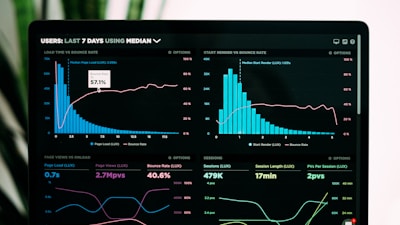
Google Analytics has become a GDPR liability and a usability headache. Three European alternatives — Plausible, Matomo and Fathom — offer privacy-first analytics. Here is how to choose and switch.
‘Sovereign AI’ — models trained, hosted and governed in Europe to be compliant by design — is moving from slogan to substance. Here is what it means for organisations that cannot send data abroad.
GDPR Protection - Your data is protected by the world's strongest privacy regulation
Data Sovereignty - Keep your data within European jurisdiction
No Mass Surveillance - European providers are not subject to US surveillance laws
Support Local Tech - Help build a thriving European tech ecosystem
Transparency - Many European services are open source and auditable
Ethical Business - European companies often prioritize user interests over ad revenue
Frequently Asked Questions
We define European alternatives as digital services that are headquartered in Europe, store user data primarily in European data centers, and comply with GDPR and European privacy standards. This includes companies from EU member states, as well as countries like Switzerland and Norway that have equivalent data protection standards.
In many cases, European alternatives offer comparable or even superior features, especially when it comes to privacy and security. Services like Proton Mail, Nextcloud, and Hetzner are world-class solutions that compete effectively with their US counterparts. The main trade-off is sometimes a smaller ecosystem or fewer integrations with other services.
The location of your data determines which laws apply to it. Data stored in the US can be accessed by US authorities under laws like FISA and the CLOUD Act, often without your knowledge. European data protection laws like GDPR provide stronger safeguards, including the right to access, correct, and delete your data.
Most European services offer easy migration tools and import features. For example, Proton Mail can import your emails from Gmail, and Nextcloud can sync with existing cloud storage providers. We include migration guides and tips in our detailed tool reviews to help make the switch as smooth as possible.
Not necessarily. Many European services offer competitive pricing, and some are even cheaper than US alternatives. The difference is that European services often charge directly for their service rather than monetizing your data through advertising. Many also offer generous free tiers or open-source self-hosted options.
We evaluate services based on several criteria: privacy practices, security features, GDPR compliance, data center locations, pricing, ease of use, and feature set. We also consider whether the service is open source, has been independently audited, and has a track record of transparency with its users.
Absolutely! European services are available worldwide and often have global server networks for optimal performance. In fact, using European services can be a smart choice for privacy-conscious users anywhere in the world, as you benefit from strong European data protection laws regardless of where you live.
GDPR (General Data Protection Regulation) is a comprehensive data protection law that applies to all organizations processing personal data of EU residents. It gives individuals rights over their data, including the right to access, correct, delete, and port their data. Companies must obtain explicit consent for data processing and face significant fines for violations.
Yes, in one way only: vendors can pay for placement on our category pages. We earn nothing when you click through to a vendor, because there are no affiliate links on this site. Paid placement can affect the order in which tools appear; it never affects whether a tool is listed or what our review says. A tool that fails our checks is not here at any price, and a vendor can ask us to correct a factual error — not to remove a criticism. Our editorial process sets out the full policy.
We welcome suggestions! Please use our contact form to submit a service for consideration. Include the service name, website, headquarters location, and a brief description of why you think it should be included. We review all submissions and add services that meet our criteria for European alternatives.
European Purpose at a glance
European Purpose is an independent directory of 2,084 European software and online services that replace US alternatives, across 212 categories. Every tool has a page that states where the company is legally established, what it costs and how it compares with the product it replaces.
An independent directory of 2,084 European software tools and online services, with 360 pages that name the US product each one can replace. It is published by Sebastiaan Smits and funded by paid placement on category pages, not by affiliate links.
How many European tools does it list?
2,084 tools in 212 categories, from 35 countries. 1,813 of them are run by companies established in the EU/EEA or Switzerland.
Which countries have the most listed tools?
Germany (510), France (296), United Kingdom (244), Netherlands (187), Switzerland (106), Sweden (79), Poland (60), Spain (58).
How is a tool judged to be European?
By where the operating company is legally established, checked in the company register or the vendor terms, not by where the product is hosted or marketed. Each tool page shows the headquarters.
Does paying change the review?
No. Vendors can pay for a higher position on a category page; it never decides whether a tool is listed or what the review says. Paid positions are marked, and the policy is on the editorial process page.